

Rudolf Steiner (1861 – 1925)
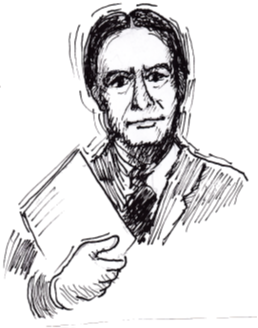
Rudolf Steiner was a prominent Austrian philosopher, educator (founding the Waldorf Schools), and mystic who developed a unique perspective on art and its significance in society. His theories of art were deeply rooted in his spiritual worldview, which emphasized the interconnectedness of the human soul, nature, and the cosmos. According to Steiner, art served as a means to bridge the gap between the material and spiritual realms, enabling individuals to access higher levels of consciousness and perception.
Steiner advocated that art was not merely a form of aesthetic expression, but rather a transformative medium that allowed individuals to attain a deeper understanding of the spiritual dimensions of existence. He argued that art should strive to reflect the universal principles and archetypal patterns found in nature and the cosmos. By engaging with such art, individuals could experience a profound sense of beauty, harmony, and unity, which would nourish their inner being and foster spiritual growth.
Moreover, Steiner proposed that art had the power to awaken dormant spiritual forces within individuals and communities. He envisioned a future where art would play a central role in the education system, enabling students to develop their creative capacities and connect with their deeper selves. In his view, art education should encompass a holistic approach, integrating various forms of artistic expression such as painting, sculpture, music, and movement. This comprehensive approach aimed to cultivate not only technical skills but also the inner potential of each student, nurturing their intuitive, imaginative, and empathetic abilities.
Rudolf Steiner’s theories of art revolved around the transformative and spiritual aspects of artistic expression. He believed that art had the potential to connect individuals with the greater cosmic order, fostering personal growth and awakening dormant spiritual forces. Steiner’s ideas on art education emphasized the importance of a holistic approach that nurtures students’ inherent creative capacities and facilitates a deepened relationship with oneself and the world. While his theories may be regarded as unconventional, they offer an intriguing perspective on the significance of art and its potential to transcend the material realm.
Wassily Kandinsky (1866 – 1944)
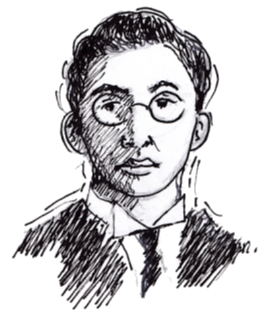
Kandinsky, the renowned visionary artist and theorist of the early 20th century, articulated in his famous treatise, Concerning the Spiritual in Art, that there exist essentially three distinct categories of paintings. He states that each of these categories pertains to a specific level of consciousness. Kandinsky called the three types of painting: Impressions, Improvisations, and Compositions.
Impressions involve capturing the physical world through observations. These kinds of paintings aim to depict the external reality as it is perceived by the artist.
Improvisations are semi-abstract interpretations of the physical world. They allow the artist to express their personal vision and emotions, while still maintaining a connection to the observable world.
Compositions, however, are pure abstract works that originate from the artist’s inner reality. Kandinsky’s significant contribution to this style was his departure from traditional perspective techniques. Instead, he embraced broader fields of color and utilized linear elements to create a sense of depth.
Kandinsky expressed his belief that art should not merely imitate nature, but rather emerge from an “internal necessity.” He argued that the subjectivity of external appearances could be countered by a conception based on inner impressions. Ultimately, Kandinsky emphasized the power of the “spiritual” inner voice as the ultimate authority in artistic creation.
As Kandinsky astutely observed, it is an undeniable certainty that the true essence of our inner reality cannot be faithfully captured by mere depictions of the external, tangible world. In order to effectively convey the profound metaphysical reality, he advocated for the utilization of elements that symbolize our thoughts, emotions, and elevated consciousness.
These elements encompass a wide array of artistic tools, including lines, shapes, colors, and textures. By harnessing these powerful components, artists can transcend the limitations of the visible world and delve into the depths of our innermost being, offering a glimpse into the realm of the intangible and the sublime. Through the skillful manipulation of lines, artists can create a sense of movement, rhythm, and energy, capturing the essence of our ever-changing life cycles.
Shapes, for example, can evoke different moods and feelings, whether it be the tranquility of a circle or the dynamism of a triangle. Colors, with their vast spectrum, have the power to evoke specific emotions and even alter our perception of space and time. Lastly, textures add depth and tactile qualities to artworks, inviting viewers to engage not only visually but also physically with the piece. Together, these artistic elements serve as a gateway to the intangible, allowing us to explore the mysteries of our own consciousness and connect with something greater than ourselves.
The significance of Steiner and Kandinsky lies in their mutual conviction that art possesses the power to surpass the confines of the physical realm and delve into the realm of profound emotions and spirituality. These two trailblazers perceived art as a conduit for expressing the most intimate thoughts and sentiments that cannot be adequately conveyed through mere representation of the external world. Consequently, they asserted that genuine artistic creation necessitated a profound connection with one’s inner self and a willingness to explore the depths of one’s consciousness. By embarking on this introspective journey, artists could produce works that resonated with viewers on a profound and spiritual level.
Most importantly, these trailblazers believed that art had the power to transcend boundaries and connect people from different cultures and backgrounds. They saw art as a universal language that could bridge gaps and foster understanding between individuals.
They emphasized the importance of authenticity in artistic expression, encouraging artists to stay true to their unique perspectives and experiences. By doing so, they believed that art could challenge societal norms and provoke meaningful conversations about our vision for the future.
Note: This is an excerpt from, The New Infinite Vision, which is available HERE.