

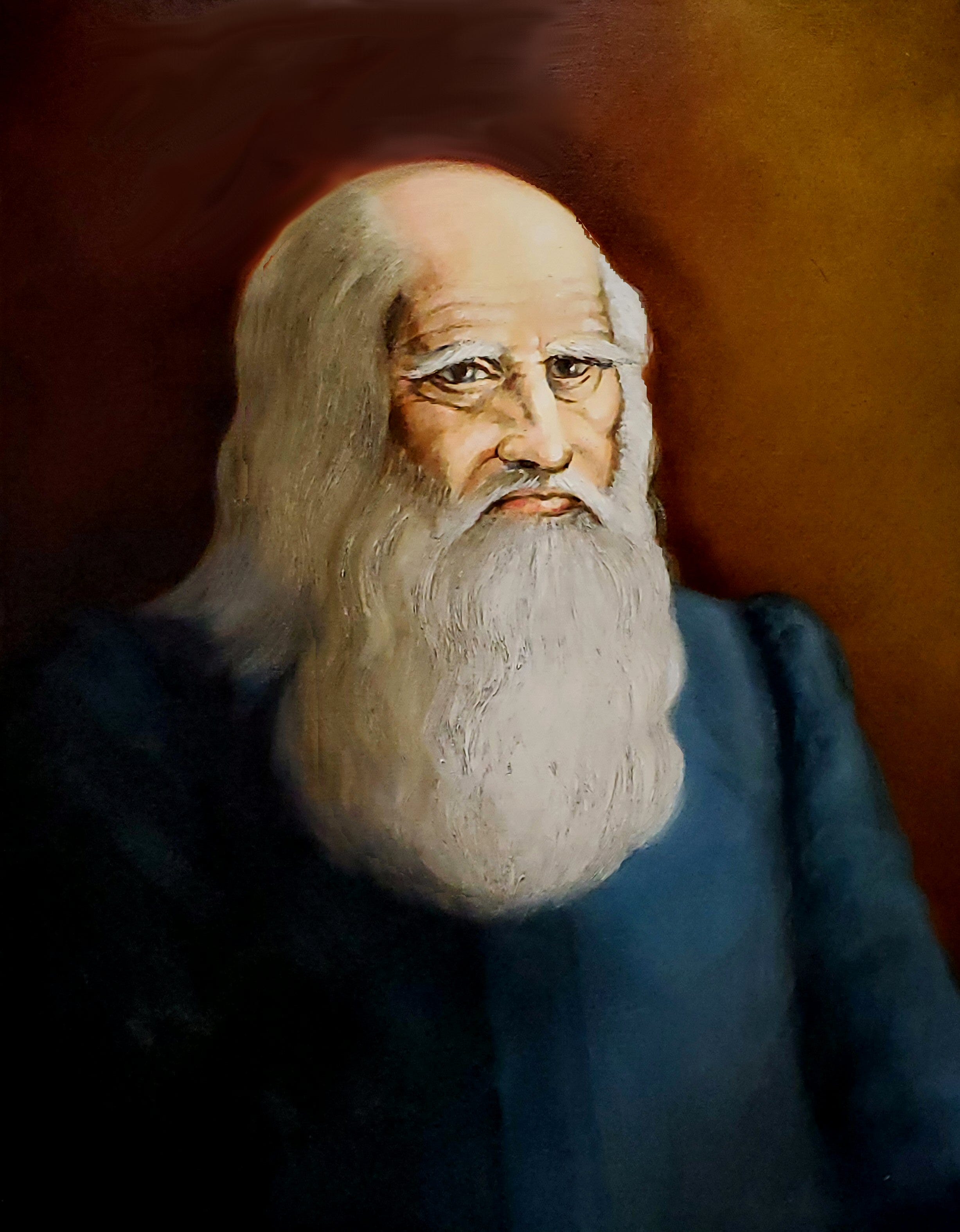
Leonardo da Vinci by James Bennett. Leonardo is widely regarded as the archetypal creative genius.
LEONARDO & CREATIVITY
Leonardo was an illegitimate child born in the tiny, provincial village of Vinci, Italy in 1452. He died in 1519 in France. Nothing in his culturally isolated childhood or his meager early education would indicate that he was prepared in any way for the meteoric rise to the pinnacle of success that he achieved as an adult.
Leonardo da Vinci would go on to change the thinking of his generation and, in turn, every generation to follow. He would redefine art, science, invention, and engineering, and in doing so, help establish the Italian high renaissance movement of the 15th century as a high point in the history of art. His most famous painting, the Mona Lisa, is arguable the most famous painting in the world today. Indeed, Leonardo stands as the iconic archetype of a genius, and certainly, Leonardo was a bona fide creative genius – a true polymath. It is entirely appropriate for us to think of Leonardo as the personification of creativity.
Unfortunately, we often measure ourselves and our own creativity against a “super star” like Leonardo. It would be much better all the way around if we appreciated the talents and abilities that we have, instead of minimizing their significance.
Minimizing our creative abilities tends to stifle their further development, but recognizing and appreciating the creativity we have will enable it to grow and develop.
Rather than feeling discouraged by comparing ourselves to a “super star,” we can be inspired by seeing the “super stars” as examples of what can be achieved, even when one’s early life, very much like Leonardo’s, seems completely inadequate.
One of the biggest myths about creativity is it is a special talent that only a few very talented individuals possess. But that idea is blatantly false. The truth is everyone is naturally endowed with creativity. There is no one who is not creative. You don’t even have to be an artist to express yourself in creative ways!
Have you ever known a young child who was not creative? Of course not, and neither has anyone else. All children are creative. Maybe you can recall some of the creative things you did as a child.
In addition, neuroscientists have conducted extensive research on creativity and have validated that indeed everyone possesses creativity in one form or another. Yes, creativity can take many forms.
A LIST OF POPULAR CREATIVE ACTIVITIES
1. Writing
1.1 Poetry
1.2 Memoir
1.3 History
1.4 Fiction
1.5 Children’s literature
1.6 Instruction guides
2. Drawing
2.1 Pencil
2.2 Colored Pencils
2.3 Pen and ink
2.4 Pastel
2.5 Chalk
3. Painting
3.1 Acrylic Painting
3.2 Watercolor Painting
3.3 Gouache Painting
3.4 Airbrushing
3.5 Acrylic Pouring
4. Papercraft and Stationery
4.1 Art Journaling
4.2 Origami
4.3 Paper Quilling
4.4 Scrapbooking
4.5 Bullet Journaling
5. Sculpting
5.1 Pottery
5.2 Clay Sculpting
5.3 Wood carving
5.4 Metalwork
5.5 Concrete Craft
6. DIY
6.1 Upcycling
6.2 Decoupage
6.3 Candle Making
6.4 Wood burning
7. Textile Arts & Crafts
7.1 Sewing
7.2 Crochet
7.3 Cross Stitch
7.4 Hand Embroidery
7.5 Knitting
7.6 Design
8. Digital Hobbies
8.1 3D Printing
8.2 Digital Illustration
8.3 Photography
8.4 Animation
9. Outdoor & Gardening Hobbies
9.1 Flower Arranging
9.2 Terrariums
9.3 Flower Pressing
9.4 Bonsai
9.5 Topiary
10. Culinary
10.1 Menu planning
10.2 Everyday food preparation
10.3 Special occasion dinners
10.4 Desserts/candies
10.5 Beverages
10.6 Baking
11. Music
11.1 Instrumental performance
11.2 Singing / Vocal arts
11.3 Composition & songwriting
11.4 Improvisation
11.5 Digital music production
12. Dance
12.1 Ballet
12.2 Modern / Contemporary
12.3 Jazz / Tap
12.4 Folk & Cultural dance
12.5 Improvisational movement
13. Performance Arts
13.1 Theater / Acting
13.2 Storytelling
13.3 Spoken word
13.4 Puppetry
13.5 Mime / Movement theater
14. Teaching / Tutoring
15. Entrepreneurship
This list, even though lengthy, does not include every possible way that creativity can be expressed. Even so, the list does indicate how creativity can be expressed in a wide range of activities.
Two things are apparent from looking at the list: first, art accounts for only a small fraction of the many creative activities; and second, the list shows clearly that all creative activities involve skills that can be learned and improved upon.
Because all the activities on this list involve skills that can be learned, does that mean that creativity is something which can be learned? The short answer is yes. Creativity is a skill. It is not some unfathomable talent that you either have or don’t have. In fact, every one of us has all the ability that is needed to cultivate this skill. There's no such thing as "I'm just not creative." Instead, there's only "Well, actually, I'm just as creative as anyone else, I've just not spent much time developing that particular skill yet."
A similar misconception is when we reach a certain age, we might think we are too old for creative activities. Actually, when we reach our senior years (usually with more time and fewer responsibilities), it’s a perfect time to take up a new creative pursuit.
Living a creative life is full of new possibilities, discoveries, exploration, experimentation, self expression, and invention. It's a habit, a way of being, a way for us to realize our true selves. There are numerous benefits in living a creative life.
Creativity enables us to express ourselves in positive ways. It also expands opportunities for learning new things. It promotes healthy cognitive processes, problem solving, and relieves stress and anxiety. Creativity allows us to enter our “happy zone” and have fun. It is a way to connect with others and gives us a sense of purpose. Creativity enhances feelings of accomplishment, pride, and self-esteem.
Creativity improves the ability to focus. Creativity often includes a degree of risk taking (Can I really do this?) and inventiveness. Creativity encourages us to be lifelong learners. Creativity often has a spiritual connection. Creativity can reward us with the assurance that we are making a worthwhile contribution to our community.
Before we consider ways to stimulate the imagination and become more creative, it is important that we assess our present situation. Please fill answer the following questions. Your answer will serve as a record of where you are as you begin. It will help you gauge your progress.
YOUR PERSONAL CREATIVITY INVENTORY
Describe your current involvement in creative activities.
What creative activities did you enjoy doing when you were younger?
What are some of the creative things your friends and family like to do?
If there were absolutely no barriers (financial or otherwise), what are some creative things you'd love to do?
What is holding you back from doing these things now?